
Shockwave
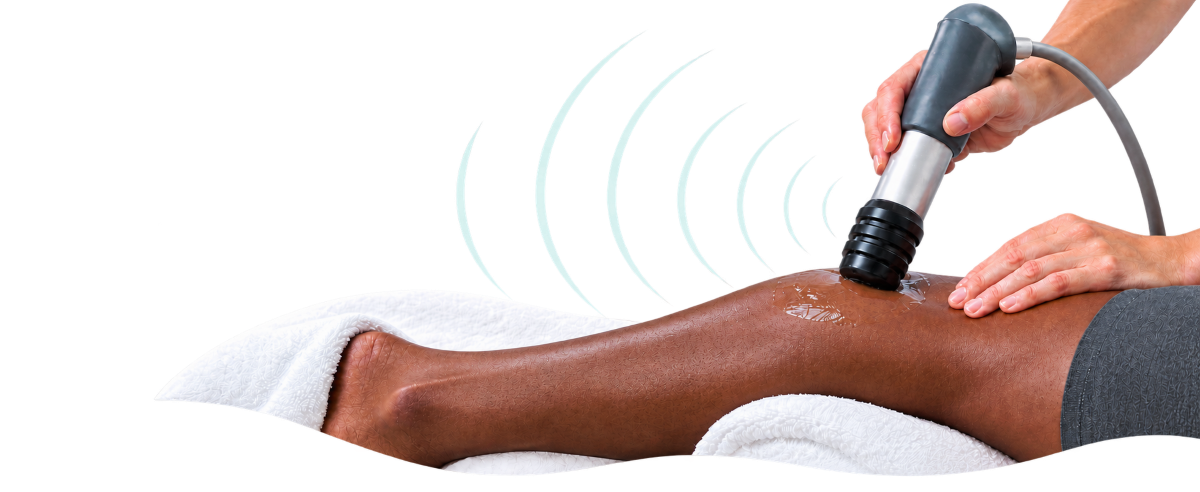
Shockwave therapy is a non-invasive treatment to ease pain and support your body’s natural healing.
Based in Hope, we provide approachable, personalised shockwave treatment for people from across the High Peak and Derbyshire Dales.
Whether you’re dealing with a long‑standing injury, a flare‑up that won’t settle or discomfort that’s holding you back, we’re here to help you move more comfortably again
CSP & HCPC registered physiotherapist
•
25+ years experience
•
Based in Hope
•
Personalised care
•
CSP & HCPC registered physiotherapist • 25+ years experience • Based in Hope • Personalised care •
What is Shockwave?
Shockwave is a non-invasive treatment that uses pneumatic pressure to send low-energy acoustic sound waves to stimulate the body’s natural repair processes — making it a great option for stubborn injuries or long-standing discomfort that hasn’t improved with other treatments. Shockwave is designed to help reduce pain, promote healing and get you moving comfortably again.
-
Shockwave therapy encourages your body to heal itself. The mechanoacoustic wave spreads out in a cone shape underneath the skin working to depths of 3-4 cm, This helps to increase blood flow to the injured area, breaks down tight or irritated tissue and helps restart the healing cycle. The shockwave also stimulates the large diameter nerve fibres to trigger release of endorphins which reduces pain.This makes it particularly effective for conditions like plantar fasciitis, Achilles tendinopathy, tennis elbow, shoulder calcific tendinopathy and other persistent soft-tissue problems.
-
People often choose shockwave therapy when an injury has been hanging around for months, affecting daily life, work or sport. It’s also a great option if you want to avoid injections or more invasive procedures. Many patients notice improvement within a few sessions, with benefits continuing to build over time as the tissue heals.
WHAT CAN SHOCKWAVE THERAPY HELP WITH
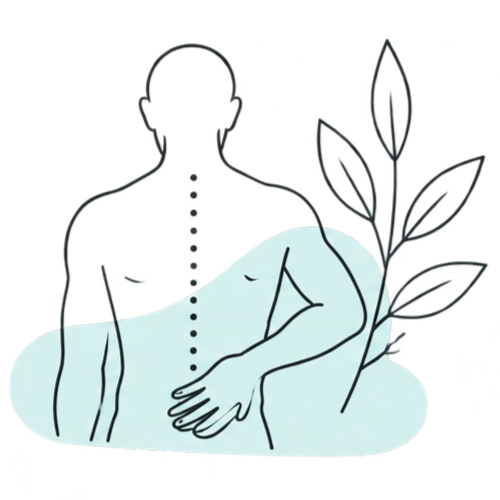
LOWER BACK PAIN
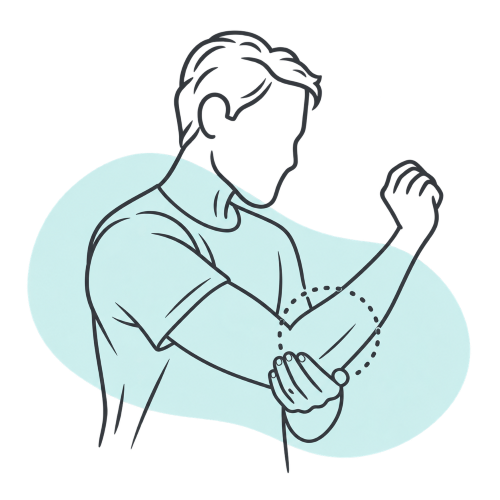
TENNIS ELBOW
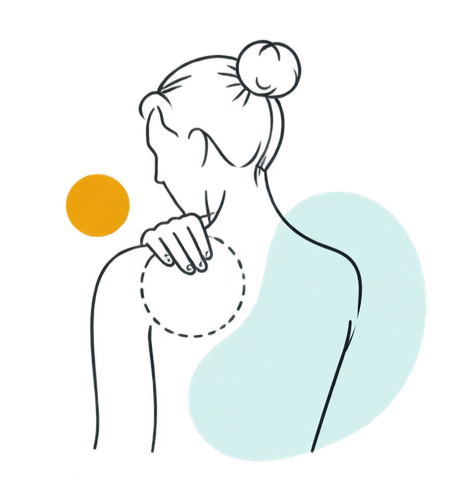
SHOULDER PAIN
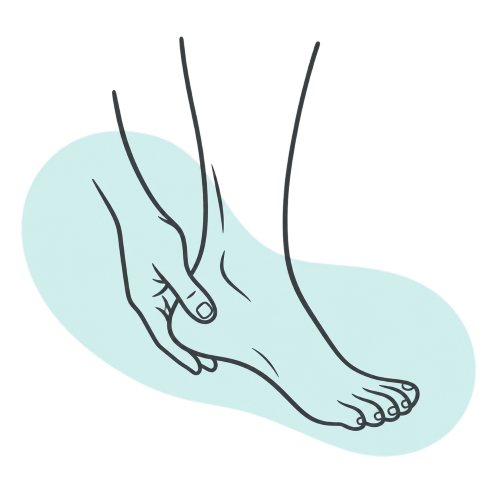
PLANTAFASCITIS PAIN (SOLE OF FOOT)
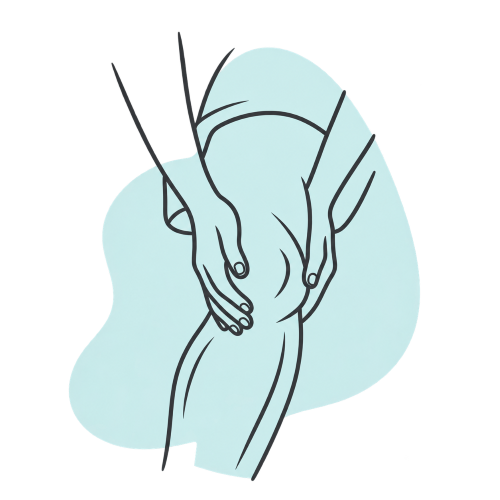
KNEE PAIN
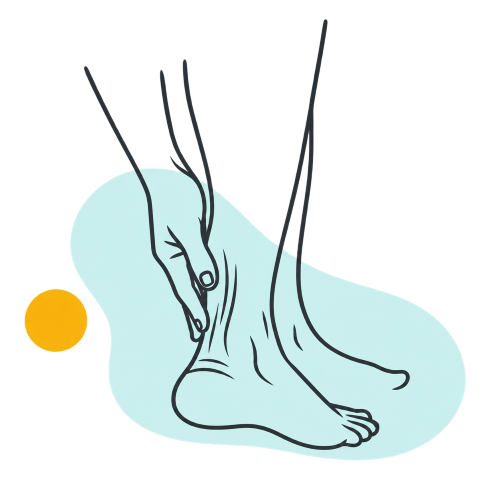
ACHILLES PAIN
WHAT TO EXPECT
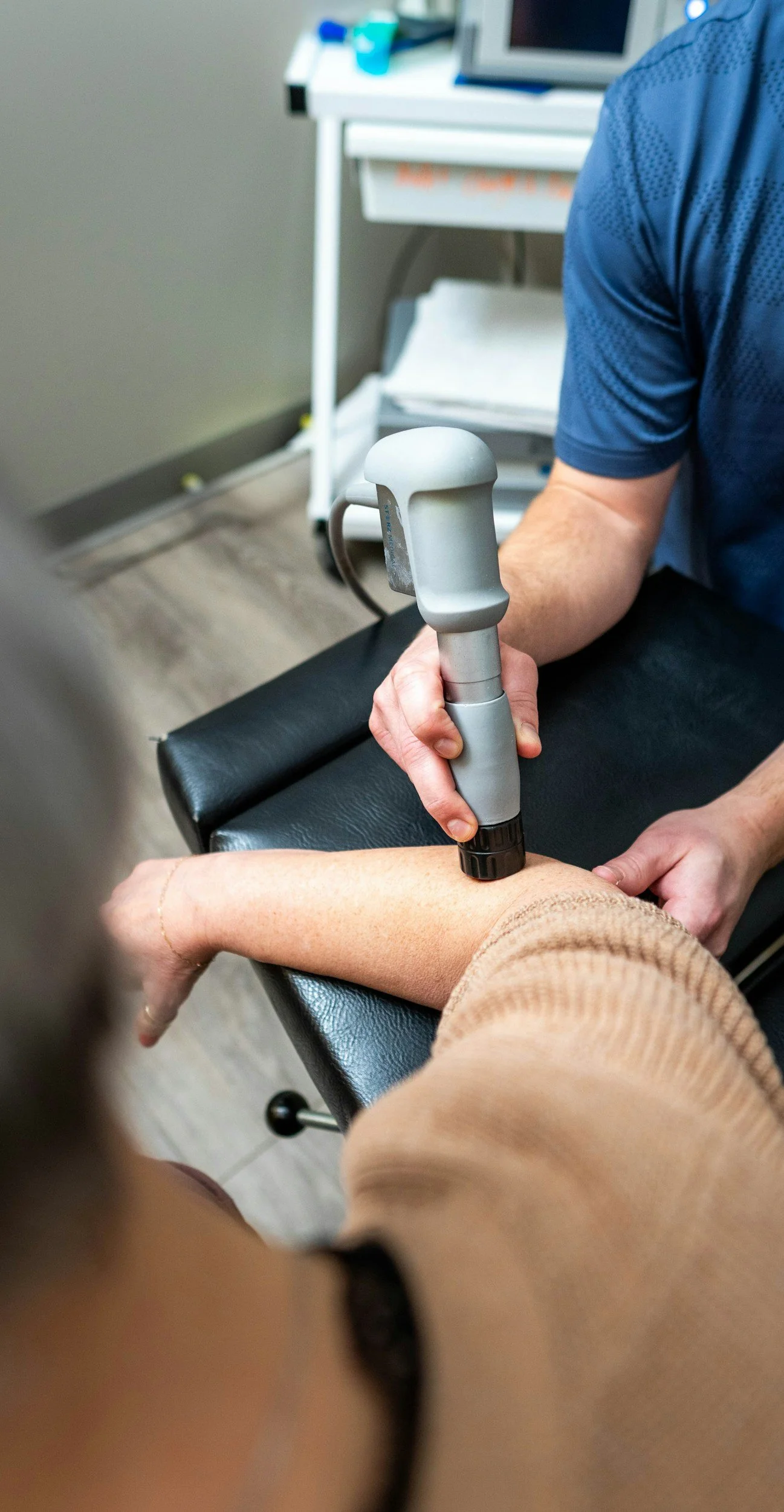
What can I expect during a Shockwave session?
In preparation for your Shockwave therapy, your physiotherapist will apply gel to the area and a small handheld device delivers controlled pulses that feel like firm tapping or vibrations. Treatment usually lasts around 10–15 minutes, and most people find it very manageable, there’s no downtime and you can carry on with your day straight afterwards. There may be some tenderness and bruising but this is short lasting and as always, if you have any concerns you can always speak to a member of the team.
HOW DOES SHOCKWAVE THERAPY WORK WITH OTHER PHYSIOTHERAPY TECHNIQUES?
What makes shockwave therapy so helpful is how well it pairs with physiotherapy. While the shockwaves help reduce pain and stimulate healing, your rehab loads your musculoskeletal system to build strength, mobility and resilience in the surrounding tissues. Together, they create a powerful combination that supports long-term recovery rather than just short-term relief.
This sounds perfect for me. How do I book a Shockwave session with Bank on Movement?
For our physiotherapists to begin shockwave, we would first need to complete an initial assessment where your injury would be discussed with your physiotherapist in detail, along with your goals and a recovery timeline. The hour-long session would also include the initial shockwave treatment* if suitable for your problem.
Patients would then be able to book in for a follow-up session to continue treatment.
We offer a free 10 minute chat with one of our team to see if our physiotherapists at Bank on Movement will be able to help you with your problem, discuss your issue and to find out how we can support your recovery.
*Treatment during the initial assessment is only possible for the 1-hour session. Treatment is not available during the 30-minute initial assessment (due to time constraints). Shockwave treatment cannot begin without first completing an initial assessment.
WHAT OUR PATIENTS SAY
★★★★★
“Tommy and the team have been fab in helping manage my plantarfasciitis. Shockwave treatment and cupping applied to the calf muscle means I can put my foot to the floor!”
SAH, 52, Hope
Shockwave prices
If you’re not sure which appointment you need, get in touch to arrange a free 10-minute chat with one of our team and we’ll be happy to advise you.
1 Hour Initial Assessment (including treatment)
£75
30 Minute Initial Assessment (assessment only)
£55
30 Minute Shockwave Follow Up Appointment (Single)
£70
3× 30 Minute Shockwave Follow Up Appointments (Pack)
£200
Frequently asked questions
Got a question? We’ve answered some of the things we’re most often asked below. If you can’t find the answer you need here, please get in touch and we’d be happy to help.
-
Not all patients are referred through to us by their GP and everyone is more than welcome to book in with us if they have any concerns relating to an injury or condition that they think we will be able to help with.
If you’re not sure whether a physiotherapy session is relevant for you, we are able to offer potential patients a free 15 minute phone-based appointment with our experienced physiotherapists to discuss your injury. To book in with us call our friendly reception team on 01433 623 602 or click on ‘Book Appointment’ at the top of this page.
-
Whilst some patients can feel a significant improvement quickly, we usually recommend a minimum of 3 sessions before any significant improvement is visible to both patient and physiotherapist.
For long-term or chronic injuries patients may need more sessions. The length of treatment and intensity of sessions all depends upon the patient, their injury and their goals.
-
Most people report mild discomfort during treatment, but not lasting pain. Intensity can be adjusted to ensure comfort.
-
Serious complications caused by shockwave are very rare.
Any side effects are usually mild and temporary:
redness
swelling
mild soreness (similar to post‑exercise fatigue)
occasional minor bruising
-
Whilst this depends upon what area will be treated, we usually advise:
Hips & Knees: Loose shorts or baggy trousers
Back: Loose, relaxed t-shirt.
Shoulders & Neck: a vest
Your next move starts here
Whether you're recovering from an injury, struggling with an ongoing problem or simply want to feel more comfortable and confident in your body, we're here to help.
READY TO GET STARTED
Not sure which treatment is right for you? Get in touch to arrange a free 10-minute chat.